Leaving all adversities and challenges behind, the Bengali New Year 1433 begins with a fresh commitment to tradition, peace, and collective growth.
On April 14, the streets and open spaces of Dhaka transformed into a living canvas of colour, rhythm and resilience as thousands upon thousands of Bangladeshis poured into the capital’s landmarks to usher in the Bengali New Year 1433. Despite temperatures that tested endurance, families, students, artists and ordinary citizens embraced the occasion with an unyielding festive spirit, turning the first day of Baishakh into a powerful reaffirmation of national identity, heritage and communal harmony.
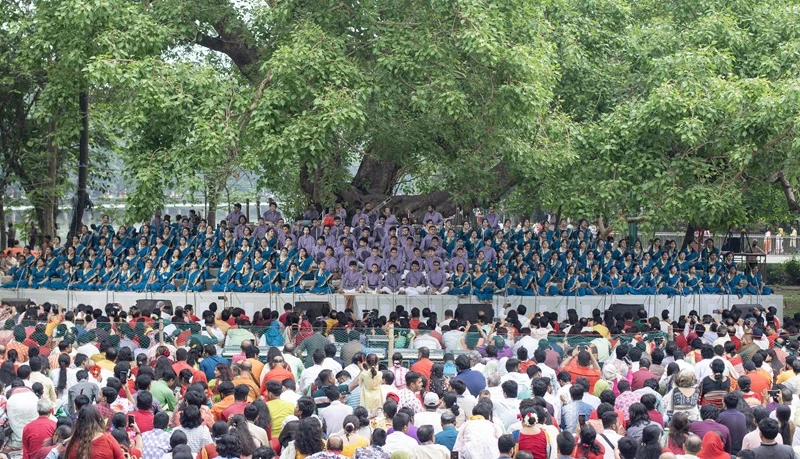
The celebrations had begun at first light. At precisely 6:15 a.m., the cultural organization Chhayanaut launched the day’s official proceedings beneath the historic banyan tree at Ramna Batamul. There, in the soft glow of dawn, music and traditional performances rang out, carrying forward a cherished ritual that has welcomed every new Bengali year for generations. The gentle strains of song and the steady pulse of drums set a tone of serenity and hope that would soon give way to the day’s more exuberant expressions.
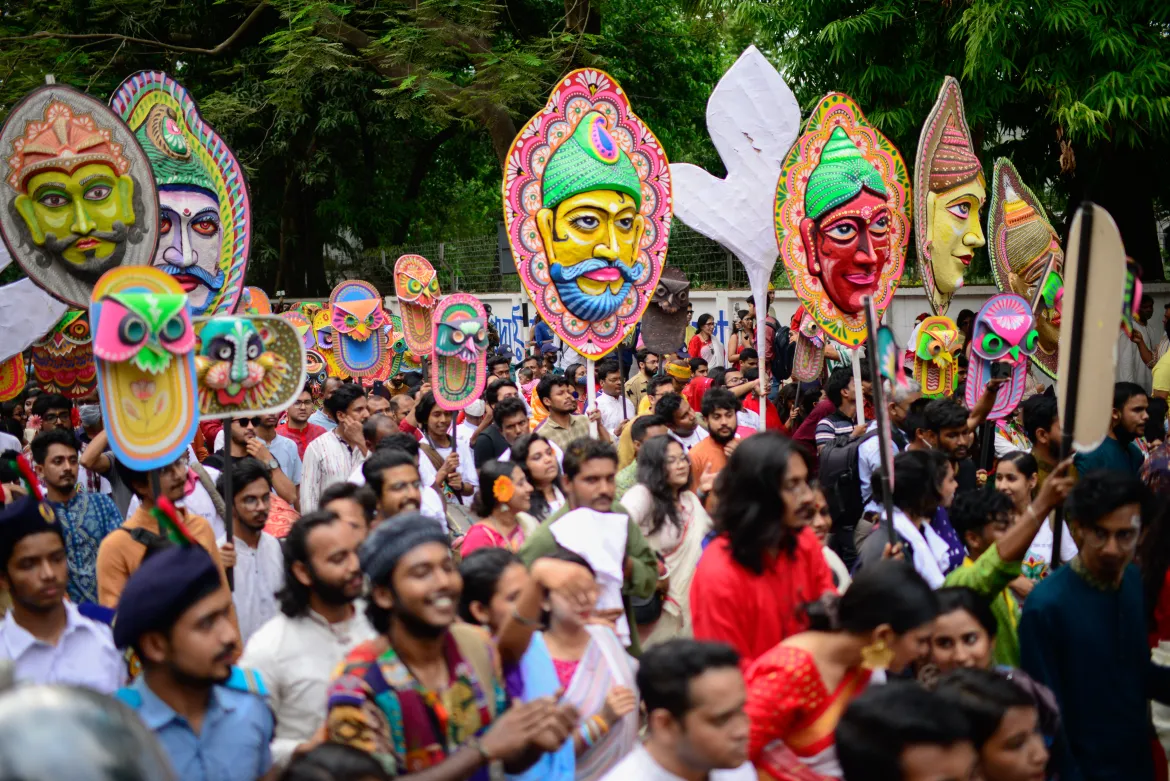
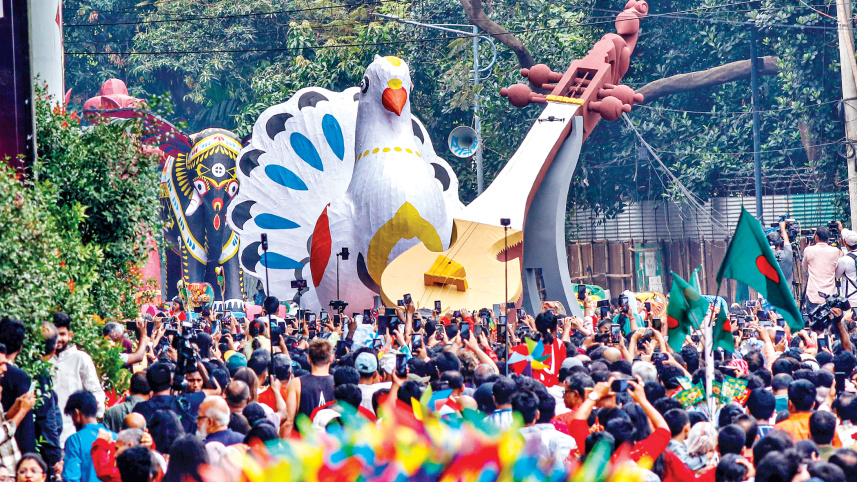
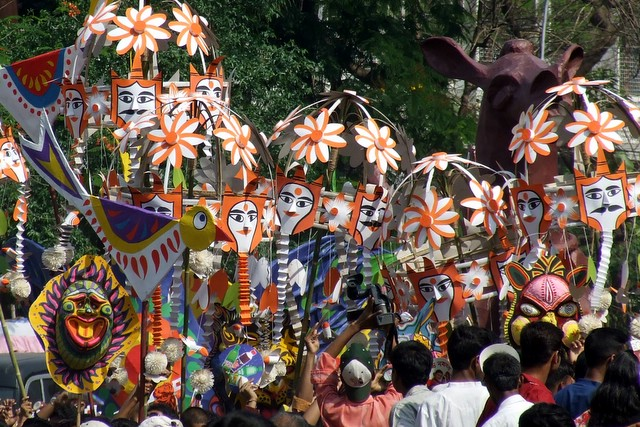
By mid-morning, the focus shifted to the Faculty of Fine Arts at Dhaka University, where the iconic Baishakhi Shobhajatra procession stepped off shortly after 9 a.m. Organised under the banner “Noboborsher Oikotan, Gonotontrer Punorutthan” — New Year’s Harmony, Resurrection of Democracy — the procession drew teachers, students and citizens from every corner of society. Five central motifs dominated the spectacle: a rooster symbolising new beginnings, awakening and the triumph of light over darkness; a dotara representing the soul of Bengali folk music and a reminder of the cultural struggles faced by Baul artists; a wooden elephant evoking folk tradition, strength and nobility; a horse fashioned in the style of traditional rural figures, stirring memories of countryside childhoods; and a pigeon conveying messages of unity, coexistence and global peace. Additional elements, representations of fish, tiger and deer cubs, goats and their young, cockatoos and peacocks, further enriched the visual narrative, each crafted with meticulous artistry by students and teachers.
As the procession wound through the university campus and adjacent streets, young men and women in crisp red-and-white attire moved in lively groups, pausing for photographs and greeting one another with warm smiles. Many had “Shubho Noboborsho” painted across their cheeks in vibrant hues near the Fine Arts Institute, their faces reflecting both personal joy and collective pride. The atmosphere, though marked by intense heat, remained electric.
Leaders at the highest levels added their voices to the occasion. President Mohammed Shahabuddin, in his message, urged the nation to exercise restraint, patience and responsibility in confronting pressing global challenges. He expressed confidence that honesty, dedication and collective endeavour would steer Bangladesh toward greater development and prosperity. The President further called upon citizens to deepen mutual respect, harmony and empathy so that a just and inclusive society might flourish.
Prime Minister Tarique Rahman, for his part, described Pahela Boishakh as an enduring emblem of national identity, history and culture that inspires fresh starts. He drew particular attention to the festival’s profound links with agriculture and rural life, noting that even in an age of technological progress, farmers continue to harmonise their work with the rhythms of nature.
The Prime Minister also highlighted several government initiatives aimed at supporting citizens, including family cards, sports cards, canal excavation projects and financial assistance for religious leaders. He announced that the Farmers’ Card programme would commence on the very first day of the new year to bolster the agricultural sector.
Across the country, the spirit of renewal found expression in countless forms. Local administrations at district, upazila and union levels organised processions, fairs and competitions, while educational institutions hosted their own cultural events. Businesses, especially in rural areas, upheld the tradition of Halkhata, opening fresh account books, and distributed sweets to customers as a gesture of goodwill. Museums and archaeological sites welcomed visitors with free entry for children, students and persons with disabilities. Prisons, hospitals and childcare centres received special distributions of traditional foods, and cultural programmes were arranged specifically for young participants. Newspapers published special supplements, and television and radio stations aired dedicated programmes throughout the day. Pahela Boishakh itself was observed as a public holiday, allowing the entire nation to pause and celebrate.
In the capital, festivities extended well beyond the university precincts. Shahbagh, Ramna Park and the TSC area teemed with visitors whose numbers swelled steadily as morning gave way to afternoon. Further afield, crowds converged on Hatirjheel, Shahabuddin Park in Gulshan-2, Mugdha Mancha, Diabari in Uttara, Rabindra Sorobor in Dhanmondi and the 300-feet road in Bashundhara Residential Area. Recreational centres and resorts on the city’s outskirts also recorded heavy attendance as families sought open spaces to mark the occasion together.
Hatirjheel, in particular, emerged as a premier destination. Footpaths and bridges overflowed with people who sat lakeside, chatted with loved ones, snapped photographs and enjoyed boat rides. Rows of colourful boats gliding across the water created a picturesque tableau. A special boat race organised at the venue drew even larger crowds by afternoon, while Ferris wheels and other rides entertained children and families amid laughter and excitement.
Visitors who came with their families to the celebration venues expressed the common sentiment of the day. It was observed that the heat felt uncomfortable, yet the joy of the occasion remained distinctly different and special. The opportunity to spend time outdoors together with family members was described as what made the day particularly meaningful.
In one family, two young daughters aged five and eight were brought by their father to take part in the New Year celebrations. It was stated that the children became very happy upon seeing the boats and enjoying the open space. Although the heat was intense, it was emphasised that the happiness of the children mattered the most.
Nearby, a couple watched the traditional boat race. They remarked that the overall arrangement was very good. Boat racing was highlighted as an important part of Bengali culture. It was noted that other crowded locations had been avoided due to the severe heat, but the natural environment at the venue felt refreshing and pleasant.
Demand for drinking water and fresh coconut water surged to exceptional levels due to the relentless sun. Brisk sales were reported by vendors, with green coconuts being sold at prices between Tk120 and Tk150. It was noted by coconut sellers that business had remained strong since morning. The high demand for coconuts was attributed directly to the intense heat, and sales were described as consistently good throughout the day.
Flower shops also experienced robust trade. Roses, marigold garlands, and tuberose sticks proved particularly popular, although some buyers complained about the elevated prices resulting from the sudden surge in demand.
Thorough preparations were made by law enforcement authorities for the occasion. Additional police personnel were deployed at key locations to ensure public safety. It was explained that extra officers had been stationed at important points so that celebrations could proceed safely. Special traffic measures were implemented to ease congestion, with certain roads being partially restricted to vehicles in order to allow safe movement for pedestrians.
Cultural programmes enlivened every major venue. Continuous performances of music, dance, and recitation were hosted from dawn until dusk, sustaining the festive mood throughout the day. It was observed by journalists covering the events that working on this day felt distinctly different, as the festive atmosphere could be enjoyed alongside professional responsibilities. Similar sentiments were echoed by visitors, who noted that people remain busy throughout the year, but Pahela Boishakh provides a valuable opportunity to meet friends and spend quality time together.
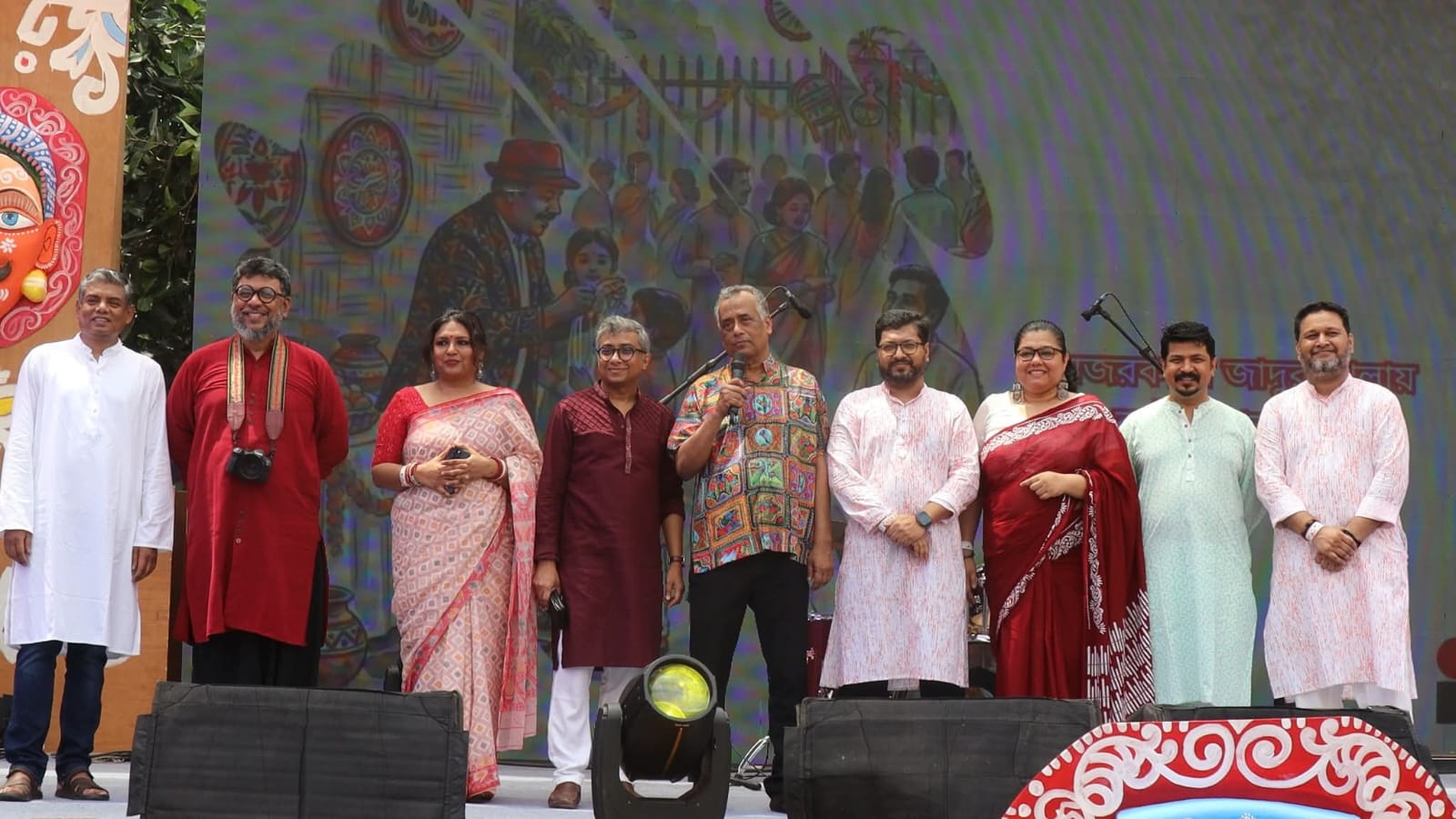
Professional and cultural organisations added their distinctive contributions. The Bangladesh Institute of Architects (IAB) turned its Agargaon centre into a vibrant hub of tradition and creativity with a full-day family event titled “এসো মাতি নতুনের আহ্বানে” — a call to embrace the new. The programme, inaugurated at 11 a.m. by IAB President Architect Professor Dr. Abu Said M. Ahmed alongside Vice President (National Affairs) Architect Nawazish Mahbub, General Secretary Architect Professor Dr. Masud Ur Rashid and other office-bearers, quickly evolved into an inclusive Family Day. Dhakis circled the venue with energetic drumbeats, while a Meena Bazaar, children’s painting festival and pottery workshop kept young participants happily occupied. Classic attractions such as the fortune-telling parrot and bioscope shows delighted visitors of all ages. At 2 p.m., a lavish traditional feast featuring Panta-Ilish and other rural delicacies allowed families to reconnect with agrarian roots. The afternoon cultural segment showcased musical renditions by Chief Architect Asifur Rahman Bhuiyan and the Buetian Gaan Adda, graceful performances by the tribal troupe Colors of Hills, an enchanting puppet show by Kaktaduwa Puppet Theatre, magic by Bairagi Sujan, and poetic recitations. Architects Syed Tausif Monawar and Samia Sharmin compered the programme with skill. Chief convener Architect Professor Dr. Masud Ur Rashid, supported by a dedicated team, ensured every detail — from décor to catering and stage management, contributed to a memorable celebration of heritage and community.
Elsewhere, the Pohela Boishakh Board organised a separate Mangal Shobhajatra from Dhanmondi, while the Bangladesh Shilpakala Academy hosted a five-day folk festival and fair beginning on the first day of Baishakh. There, performances of Dhakdhol, Lathikhela, Jari, Sari, Gambhira, Bhawaiya, Puthipath, Jatrapala and contributions from small ethnic groups created a rich tapestry of folk expression. Orchestras, Dhamail dances and Jatrapala plays featured prominently on opening day. The Bangladesh Folk Arts and Crafts Foundation is preparing to launch its own 14-day traditional fair from April 20, and Bangla Academy, in collaboration with the Bangladesh Small and Cottage Industries Corporation, has already opened a seven-day fair of discussions and cultural events running through April 20.
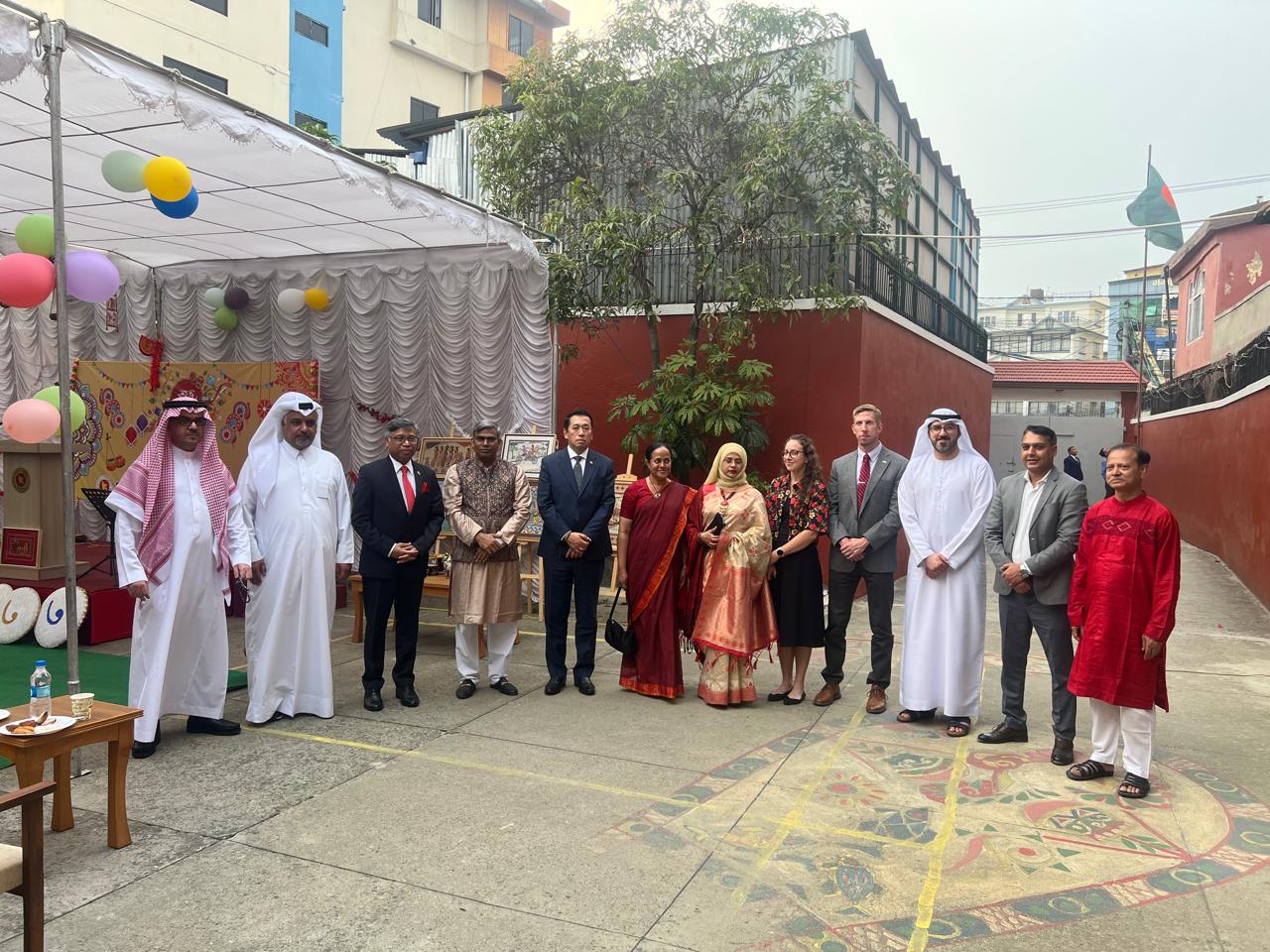
Organizations, including the Embassies and High Commissions of different countries in Bangladesh and the U.N., also joined the nationwide chorus of celebration, each adding its unique voice to the collective observance.
By the time evening settled over the city, Dhaka had once again proven that the spirit of Pohela Boishakh transcends weather, politics and daily monotones. In the laughter of children on Ferris wheels, the rhythmic beat of dhaks echoing across institutional grounds, the quiet dignity of families sharing a simple meal by the lake, and the proud march of symbolic motifs through university avenues, the festival reaffirmed its timeless power. It reminded a nation, still navigating challenges both at home and abroad, that renewal is not merely a date on the calendar but a living commitment to harmony, democracy, cultural pride and shared humanity. Even as the heat of the day lingered in memory, the warmth of communal celebration endured, promising that the year 1433 would be met with the same resilience, creativity and unity that had defined its very first hours.
Originally, Emperor Akbar introduced the Bengali solar calendar to align tax collection with the harvest cycle. This birthed the tradition of Halkhata, clearing old debts and opening new business ledgers for the year. The festival evolved into a symbol of Bengali nationalism in defiance of Pakistani cultural suppression. In 1967, the cultural group Chhayanaut started the iconic sunrise concerts at Ramna Batamul to assert Bengali identity. Dhaka University Fine Arts students launched this colourful “Procession of Well-being” (featuring giant masks and floats) as a creative protest against military autocracy. UNESCO declared it an Intangible Cultural Heritage in 2016, and it is now Bangladesh’s largest secular festival.